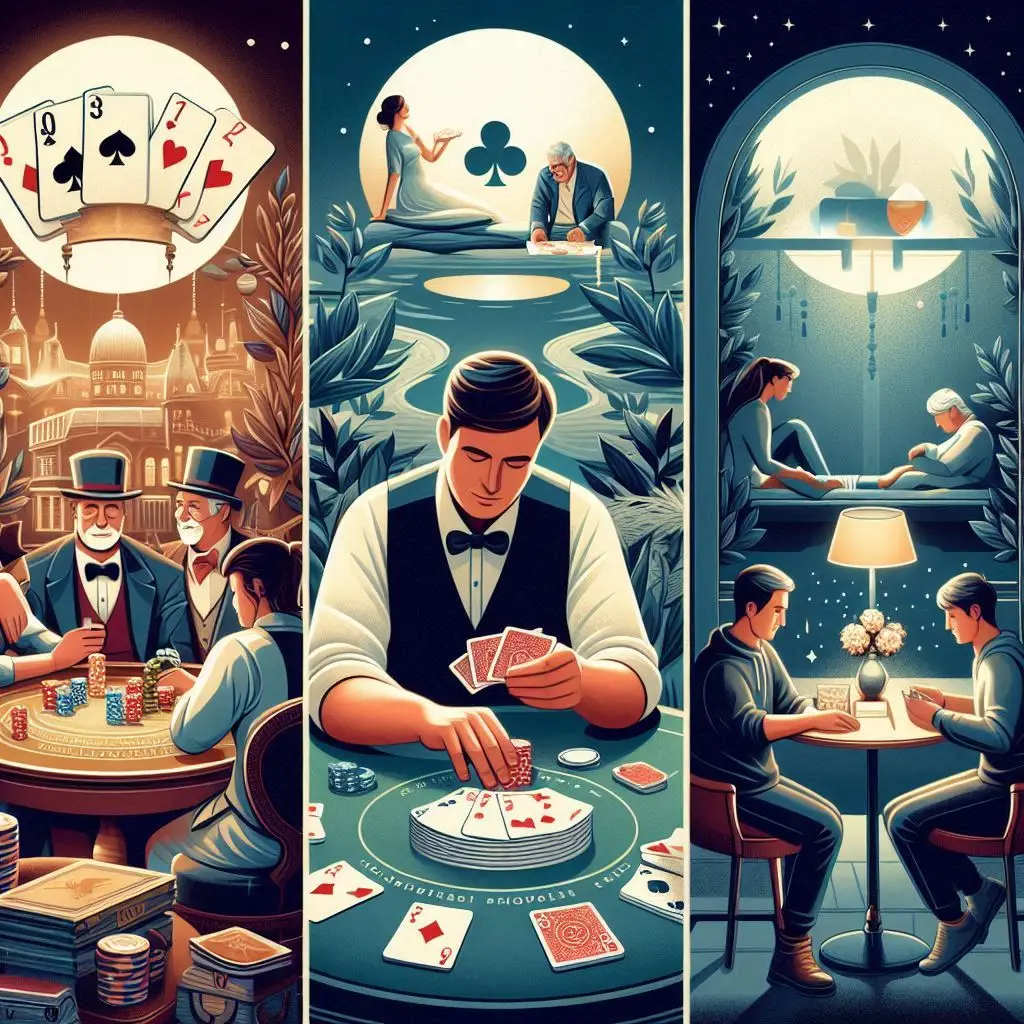
When people talk about bestselling games, they usually think of blockbuster video games, massive board-game franchises, or cultural gaming icons. But the question “What is the #1 most sold game?” has a surprisingly unexpected answer. It isn’t a modern title, it isn’t digital, and it isn’t tied to a specific brand. Instead, the bestselling game of all time is older than electricity, older than printing presses, and older than most recorded entertainment traditions.
The #1 most sold game in human history is the standard 52-card playing deck.
Not Uno.
Not Pokémon cards.
Not Monopoly.
Not Mario.
Not Tetris.
The ordinary deck of playing cards — the timeless companion used in hundreds of the most popular types of card games — is the best-selling, most reproduced, most distributed, and most universally owned game product ever created.
To understand why, we need to explore how this humble deck became the world’s top gaming item, how it compares to other bestselling games, and how its mechanics shape everything from gambling to family nights to strategic competitions. Along the way, we’ll also clarify the broader definition of card games to understand why a simple deck became the backbone of a massive global gaming ecosystem.
Why the 52-Card Deck Is the #1 Most Sold Game Ever
1. Ubiquity Across Every Country
Unlike branded games, the standard deck is not tied to a region, franchise, or company. Every country sells its own version, prints its own designs, and adopts its own styles. From U.S. Bicycle cards to India’s local decks, from European patterns to Asian exports, the standard deck exists everywhere.
2. Versatility: Hundreds of Games, One Product
Most bestselling games are tied to a single set of rules. A deck of cards, however, can be used to play:
-
Poker
-
Blackjack
-
Rummy
-
Solitaire
-
Spades
-
Hearts
-
Bridge
-
Go Fish
-
War
-
Crazy Eights
-
Speed
-
Gin Rummy
-
Pinochle variants
…and hundreds more.
Other games offer a single experience. A deck of cards offers infinite ones.
3. Affordability and Production Scale
Card decks are cheap to manufacture and affordable for almost everyone. For centuries, they have been mass-produced in factories around the world. Their simplicity — just printed paper — makes them the easiest high-volume game to distribute.
4. Longevity and History
Playing cards have existed since the 9th century. Every century, every generation, and every culture has contributed to their spread. No modern game can compete with 1100+ years of distribution.
5. Physical + Digital Dominance
Digital Solitaire alone has been played billions of times. Combine that with:
-
online Poker,
-
digital Rummy,
-
Blackjack apps,
-
competitive card-game platforms,
and the deck of cards becomes not just the #1 sold physical game — but the backbone of massive digital gaming ecosystems.
How the Standard Deck Outsold Every Other Game
To appreciate how dominant the 52-card deck is, we need to compare it to other global giants.
Comparison to Bestselling Board Games
Chess
Chess is iconic, but it is neither mass-manufactured at the same scale nor universally owned. Many households do not own a chess set, and chess never reached the production numbers of standard card decks.
Monopoly
Monopoly has sold over 275 million copies — impressive, but still microscopic compared to card decks, which number in the billions.
Scrabble
Scrabble is huge, but not universally owned, and far from the top globally.
The standard deck outsells every board game in history.
Comparison to Bestselling Video Games
Minecraft
Sales: ~300+ million
A global powerhouse — but still only a fraction compared to card-deck production.
GTA V
Sales: ~200 million
Massive, but nowhere near the billions of card decks printed across centuries.
Tetris
Despite being one of the most widely played digital games ever, its physical sales cannot match the universal distribution of playing cards.
The standard deck is the only game product consistently sold in every era, every generation, and every country.
Why the 52-Card Deck Dominates Gaming Culture
Card decks aren’t just popular because they’re old or cheap — they’re popular because they create experiences that no other single game product can match.
1. Adaptability to Player Count
You can play:
-
alone (Solitaire)
-
with two players (War, Speed)
-
with small groups (Rummy, Poker)
-
with large groups (Mafia variants, President)
No board game has this range.
2. Shared Cultural Framework
Because so many most popular types of card games use the same structure:
-
four suits,
-
13 ranks,
-
face cards,
-
structured sequences,
players can effortlessly transition from one game to another.
This shared structure creates a universal gaming literacy.
3. No Copyright Limitations
Unlike proprietary card games (Uno, MTG, Pokémon), playing cards are in the public domain. Any company, anywhere, can print decks.
This freedom multiplies distribution exponentially.
4. Card Games Are Universal Social Activities
People use card decks for:
-
gambling
-
bonding
-
competitions
-
learning math
-
team games
-
drinking games
-
travel entertainment
-
office breaks
-
meditative solo challenges
Card decks adapt to any social environment.
5. Card Games Teach Foundational Skills
From probability to memory, psychology, strategy, sequencing, and reading humans — card games train essential mental skills. This makes them educational for children and intellectually stimulating for adults.
Top Games That Made the Standard Deck the #1 Best Seller
The deck’s dominance exists because of the iconic games built around it. Let’s break down the games that contributed most to its global sales and cultural imprint.
Poker — The Competitive Backbone
Poker is the most influential competitive card game in the world. It fuels:
-
casinos,
-
tournaments,
-
online platforms,
-
home games,
-
televised events,
-
and entire professional careers.
Its strategic depth made the standard 52-card deck a global symbol of skill, risk, and psychology.
Blackjack — The Casino Giant
Blackjack’s simple rules — reach 21 without busting — made it the most played casino card game worldwide. Millions of decks are printed specifically for casinos and training tables.
Rummy — The Social Icon
Families in Asia, Europe, North America, and Latin America all play some version of Rummy. Its accessibility makes it one of the greatest engines of card-deck sales globally.
Solitaire — The Digital Explosion
Solitaire is one of the most played digital games in history, especially during the Windows computing boom. Its global penetration taught billions how a standard deck works.
Hearts, Spades, Bridge — The Household Classics
These games became staples across American homes, schools, clubs, military bases, and seniors’ communities. They rely entirely on the standard deck, amplifying its cultural value even more.
Why No Other Game Will Ever Surpass the Standard Deck
Even with new digital trends, no single game product can catch up to the historic momentum and universal adoption of the 52-card deck.
Longevity is impossible to replicate.
Card decks have over a millennium of head start.
Cultural diversity is unbeatable.
Every region has its own traditional games.
Costs are unbeatable.
Card decks cost less than most toys, games, or digital systems.
Flexibility is unmatched.
One deck supports hundreds of unique games.
Digital synergy is permanent.
Solitaire, Poker, Blackjack, and Rummy keep the 52-card deck alive online.
So, what is the #1 most sold game?
It’s not modern, not digital, and not tied to a brand.
It is the standard 52-card deck — the universal foundation for the most popular types of card games in the world.
The 52-card deck:
-
crosses cultures
-
spans centuries
-
evolves constantly
-
fuels entire industries
-
supports hundreds of unique games
-
and remains endlessly relevant
From casinos to classrooms, family nights to mobile apps, ancient traditions to modern tournaments, the standard deck has achieved something no other game ever will: complete cultural immortality.
It’s more than a game — it’s the world’s universal language of play.